

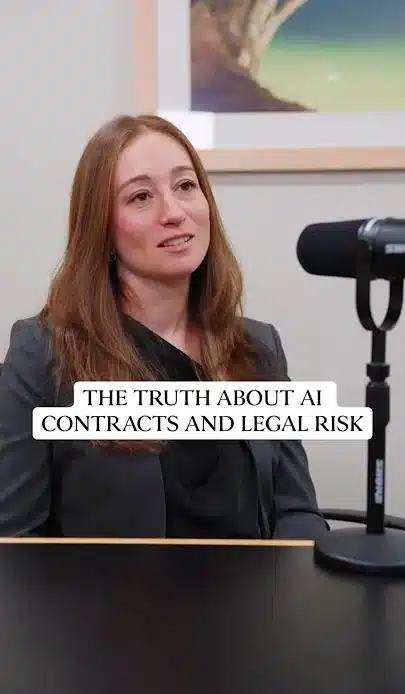
Artificial intelligence has made it remarkably easy to create documents that once required hours of drafting. A business owner can ask an AI tool to generate a commercial lease, service agreement, purchase contract or partnership agreement and receive something that looks polished within seconds.
That convenience can make an AI-generated contract feel like an easy way to save time and legal fees.
The problem is that a contract does not need to look obviously wrong to create serious problems.
A document can use professional-sounding legal language and still omit an important protection, misunderstand the transaction, rely on the wrong law or create obligations the parties never intended. Those problems may not become apparent until a payment is missed, a transaction fails or the parties disagree about what the contract requires.
At that point, the money saved by generating the agreement may be far less than the cost of trying to fix it.
Artificial intelligence can be useful for organizing information and helping people understand unfamiliar concepts. But generating legal language is different from evaluating whether an agreement protects the parties involved.
AI Can Draft Language Without Understanding Your Deal
Generative AI only knows the information it is given.
Consider a business owner who asks an AI tool to “draft a commercial lease for a New York retail store.”
The resulting document may include rent, security deposits, renewal terms and default provisions. It may look complete.
But the tool may not know that the tenant needs an exclusivity clause because a direct competitor could materially affect revenue. It may not know that the owner plans to sell the business in three years and therefore needs appropriate assignment rights. It may not know that an expensive HVAC system is nearing the end of its useful life or that the tenant expects the landlord to remain responsible for it.
Those are not formatting issues. They are deal issues.
For significant transactions, effective real estate contract negotiations require more than filling in blanks. The agreement should reflect what the parties are trying to accomplish and how risk will be allocated if circumstances change.
A Generic Contract May Not Reflect New York Law
Another concern is jurisdiction.
A general-purpose AI system may produce language drawn from different states or legal concepts that do not accurately reflect New York law.
A contract governing a New York transaction should be evaluated under New York law and drafted with the actual agreement in mind.
The fact that language sounds legally sophisticated does not mean it is appropriate for the transaction.
New York Courts Generally Enforce What the Contract Says
This is one of the most important reasons drafting matters.
New York courts generally enforce clear and unambiguous written agreements according to their terms. Courts do not ordinarily rewrite a contract simply because one party later decides that a provision is unfavorable or realizes that an important protection was omitted.
That means the time to identify a problem is usually before the agreement is signed.
If an AI-generated contract imposes a broad personal guaranty, restricts assignment, creates a one-sided termination right or fails to address an important contingency, the fact that the language came from an AI tool does not necessarily protect the person who agreed to it.
What the Contract Leaves Out Can Be the Biggest Risk
People often focus on the possibility that AI will insert something incorrect.
Sometimes the greater risk is what the document fails to address.
A buyer may discover that the agreement does not clearly address a financing issue.
A commercial tenant may learn that nothing prevents a direct competitor from opening next door.
A business owner may try to sell the company and discover that the agreement restricts assignment.
A service provider may terminate a relationship only to find that the contract never addressed outstanding payments, intellectual property or unfinished work.
The document did not necessarily contain an obvious error. It simply failed to anticipate the situation that eventually mattered.
Contract Drafting Is About Allocating Risk
A good contract does more than describe what happens when everything goes according to plan.
It should also address what happens when something goes wrong.
Who carries the risk if financing falls through?
Who pays when repairs cost more than expected?
What happens if a tenant needs to leave early?
Can a business transfer the agreement when ownership changes?
Which obligations survive termination or closing?
Different parties may reasonably want very different answers to those questions.
That is why two commercial real estate transactions can involve similar properties and lease terms while allocating financial risk very differently.
The same principle applies to residential contracts. As discussed in our guide to why residential real estate contracts matter more than you think in New York, transaction-specific terms involving repairs, credits and escrow can become some of the most important provisions in the agreement.
Professional-Sounding Language Can Create False Confidence
One of the risks of generative AI is that incomplete or inaccurate language can still sound convincing.
A document with formal headings, defined terms and legal terminology may appear reliable.
But appearance does not determine whether the agreement protects the parties.
The more important questions are what the language means, how the provisions interact and what happens if a dispute develops.
AI Cannot Negotiate the Deal for You
Drafting is only one part of the contract process.
Important protections often emerge through negotiation.
A landlord may request a broad personal guaranty. A tenant may seek to limit it.
A proposed lease may prohibit assignments. A business owner expecting to sell the company may need greater flexibility.
A landlord may shift major repair obligations to the tenant. The tenant may try to limit responsibility for structural systems or expensive equipment.
An AI tool can suggest alternative language, but it cannot independently assess negotiating leverage, understand which business priorities matter most or decide which concessions are worth pursuing.
Be Careful With Confidential Information
Consumers and business owners should also be cautious about uploading sensitive transaction documents, financial information, business strategies or attorney communications into general-purpose AI platforms.
Different AI products have different policies concerning data retention, access and use.
Before entering confidential information into a system, users should understand how that platform handles the data.
AI Can Be Useful Without Replacing Legal Review
Artificial intelligence can still be a helpful tool.
It may help organize questions, explain unfamiliar terminology or prepare a business owner for a discussion with an attorney.
The risk is not simply using AI.
The risk is treating AI-generated legal language as though generating the document and evaluating the agreement are the same thing.
They are not.
The Cheapest Contract Can Become the Most Expensive One
The appeal of an AI-generated contract is easy to understand.
A business owner may believe that legal review is unnecessary when software can produce a document instantly.
But the real cost of a contract is not limited to what it costs to create.
An unclear termination clause can result in a dispute.
A missing assignment right can complicate the sale of a business.
A broad personal guaranty can expose the owner’s personal assets.
A poorly drafted real estate agreement can lead to litigation over repairs, credits or obligations after closing.
When disagreements arise, the written agreement often becomes central to the dispute. Sabrina Rabban, Esq. PLLC represents clients in real estate litigation involving contractual and property-related matters.
The cost of identifying those risks before signing may be far less than trying to resolve them later.
Have Important Agreements Reviewed Before You Sign
Artificial intelligence is likely to remain an increasingly useful tool for businesses and consumers.
But a contract is not valuable because of how quickly it can be generated.
Its value comes from whether it accurately reflects the transaction, addresses foreseeable risks and clearly defines each party’s rights and responsibilities.
Before relying on an AI-generated agreement for a significant New York transaction, consider having it reviewed by an attorney who can evaluate the language in the context of the actual deal.
Sabrina Rabban, Esq. PLLC assists individuals and businesses with real estate contract negotiations, residential and commercial real estate transactions and contract-related disputes throughout New York.
Contact Sabrina Rabban, Esq. PLLC to discuss a proposed agreement before signing.
This article is provided for general informational purposes only and does not constitute legal advice. Contract rights and obligations depend on the language of the agreement, applicable law and the circumstances of the transaction. Reading this article or contacting the firm does not create an attorney-client relationship.